
A Tribute to Piyush Pandey
25 Nov, 2025 149
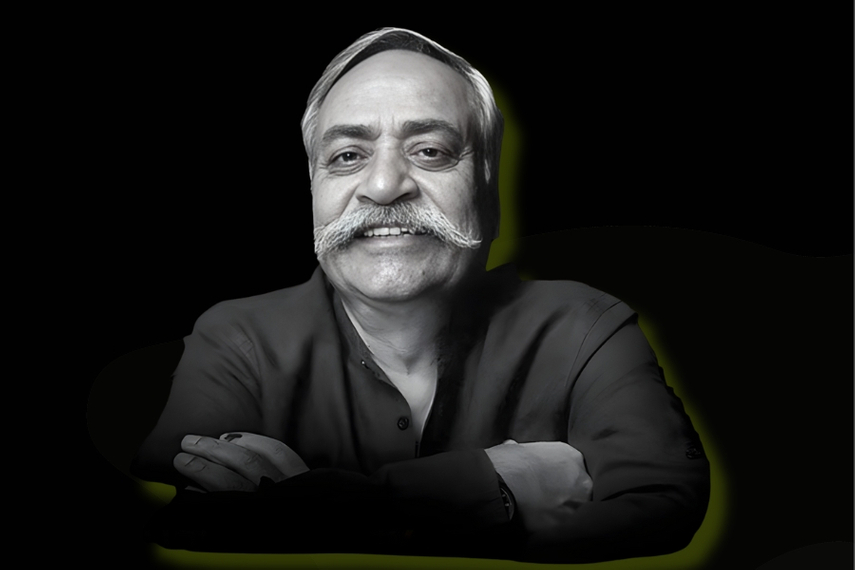
Some evenings feel less like events and more like collective introspection. The tribute to Shri Piyush Pandey, hosted by PRSI Kolkata, was one such evening. It was warm, honest, humble, and almost disarmingly informal. It felt right because the man we were honouring carried his brilliance with an easy humility. His humour carried the weight of his philosophy. His humor carried profound thoughts. And his simplicity made him extraordinary.
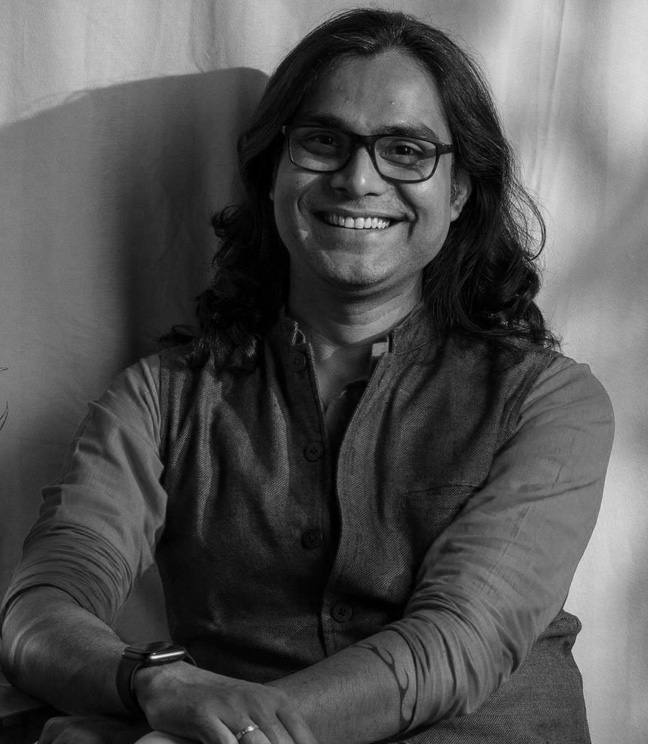
When I stood at the podium, I felt a strange sense of time folding because the year Piyush Pandey entered advertising was 1982, and I was born in 1981. I joked that I was almost his “son” by generation, far too junior to call him “Piyush” as my seniors on stage did. But beneath that humor was reverence. Because you don’t call your Guru by his first name.
And that word Guru became central to everything I shared that evening.
I said: “Guru is made up of two Sanskrit syllables: ‘gu’, meaning darkness, and ‘ru’, meaning the one who removes it. The Guru dispels ‘darkness‘.
Piyush Pandey did that for Indian advertising.
What he did was not only create ads, but he dismantled the fog that kept Indian storytelling imitating Western templates. He brought light into a world that had forgotten its own colors. He tuned the voice of Indian advertising back to the soul of India.
I also spoke about tuning – Communication is like radio. The message is always there, floating in the air. You just have to adjust the receiver to the right frequency to hear it clearly.
What Piyush Pandey excelled at was that exact frequency — the heart of this country.
Not the English-speaking metros, not the borrowed accents of the world, not the polished monotone of global advertising — just an honest voice shaped by who we are.
He connected with India. Its rhythm. It’s humor. Its flaws. It’s truth.
Through that connection, he taught us something fundamental: Communication is not merely the transfer of information; it is the creation of a relationship.
I shared a brief reflection — our body is a collection of food, and our mind is a collection of information. The way we think, speak, and perceive is shaped by what we have collected over a lifetime. So communication only works when it resonates with what the receiver has gathered.
If I enter a room and speak Hebrew when no one understands it, communication fails before it even begins.
Piyush Pandey knew his audience. He spoke the language of their experiences — cultural, emotional, and linguistic.
That is why his work reached every corner of this country.
Follower and Thinker: The Two Sides of Communication
During my speech, I shared a story that has stayed with me for years.
A Guru had two disciples. One followed instructions exactly; the other grasped the deeper meaning. When the Guru gave his last two lessons — “Eat sweet food” and “Work only in the shadow” — the follower obeyed blindly, consuming sugary food and building shelters to stay in the shade.
But the thinker understood the message. Sweet food means that food tastes best when you’ve worked hard enough to feel hungry. Working in the shadow meant working from dawn to dusk, using daylight as your guide.
This story sticks with me because communication is never just words. Real communication occurs when the receiver becomes a thinker, not only a follower.
Piyush Pandey didn’t create followers. He created thinkers.
He made us question. He made us feel. He made us look at our own streets, our own people, and our own idioms, and recognize the power in them.
What I Wish We Had Preserved Better
Even as we honored him, I expressed a gentle concern — not about his work, but about how little we, as an industry and as a nation, have preserved his legacy.
Despite everything he contributed, our academic system still relies heavily on Western ideas. Advertising schools worldwide — from JWT to Ogilvy’s international training — have their philosophies embedded in university systems. But, in India, the kind of Indianised creativity that Piyush built is still not documented, taught, or protected as it should be.
If you strip away modern advertising and examine what truly embodies the spirit of Indian creative communication — the amount that reflects his depth, his earthiness, and his Indianness — it would likely be less than one percent.
This is not a criticism of the present. It is a reminder of what we are losing.
Why This Tribute Matters
In the last 15 to 20 years, India has grown more confident in its identity. We are more Indian today, unapologetically so, than we were a generation ago. This cultural confidence owes much to people like Piyush Pandey, who began nurturing that confidence back in the 80s.
He believed Indian stories were strong enough. He believed our humor was rich enough. He believed our emotions were universal enough. He believed our language, in all its forms, was worthy enough.
That is why this tribute is not just about honoring a legend. It is about acknowledging a shift he created, a change we still benefit from.
My Final Reflection That Evening
As I concluded my speech, one thought stayed with me: A Guru’s legacy is not measured by what he created, but by what he inspired others to create.
Piyush Pandey empowered generations of creative thinkers, including me, even though I never worked directly with him, but was shaped by the world he created.
His light still guides us. His work still roots us. His voice continues to remind us to be honest, Indian, and fearless.
And somewhere in that light, I believe all of us — marketers, writers, filmmakers, designers — continue to find our own frequency.
Thank you, Guruji.
We are still tuning in.
ABOUT ME
I like to think of myself as a creative professional. At a very early stage I was besotted with the urge to create something of my own. Hence my brainchild; Mayabious Art was born. Having taken this forward with technological innovation and animation techniques, Mayabious Art grew from strength to strength to mold into one […]
RECENT POST
- The Earth Whispers. Indic Aranya Carries the Message.
- A Tribute to Piyush Pandey
- Indian Yoga
- Nature Photography
POPULAR POST
-
 Nature Photography
April 26, 2022
-
 Indian Yoga
April 29, 2022
-
 Motion graphic is in demand
January 4, 2017
-
 Animation is just art
December 1, 2016
-
 Few Things To Know Before You Come To Animation
January 4, 2017
Leave a Reply